
Workshop to Develop a Global Network of Indigenous Co-operatives
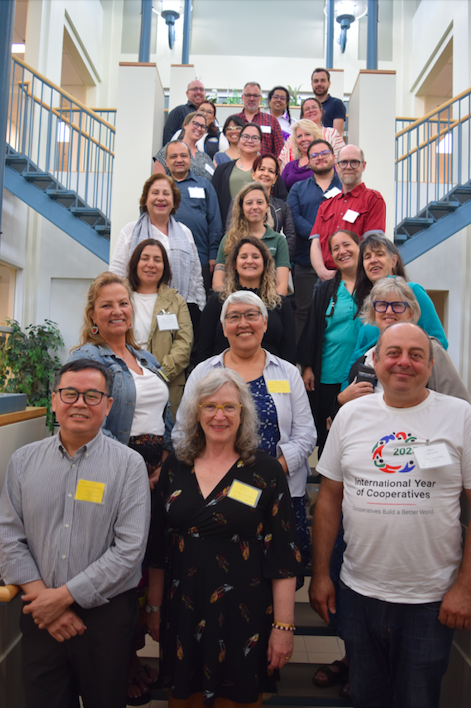
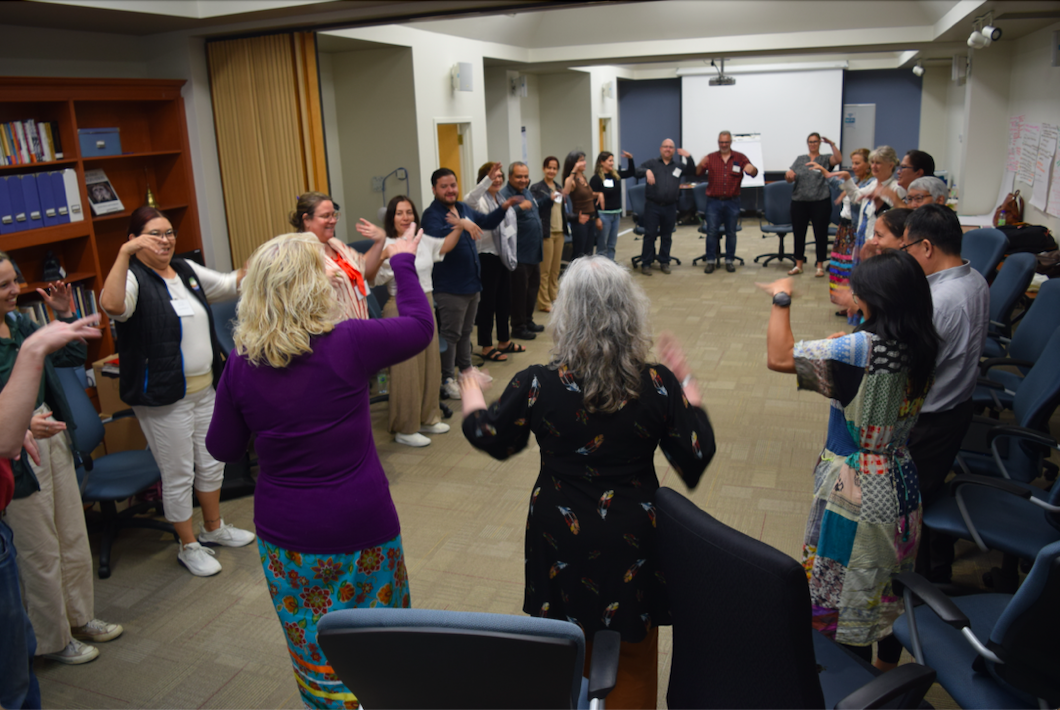
Hosted by Arctic Co-operatives Limited and La Fédération des coopératives du Nouveau-Québec, and sponsored by the Canadian Association for Studies in Co-operation (CASC), members of the global co-operative movement from Argentina, Cuba, Mexico, Saskatchewan, Ontario and Quebec, gathered on July 7, 2025, in Baie-D’Urfé,PQ, to talk about the experiences of Indigenous cooperatives and a vision to develop a new International Indigenous Co-operative Network to promote and address challenges to their work.
Mary Nirlunggayuk (Arctic Co-operatives – ACL) and Chhoan Sokchiveneath (La Fédération des Coopératives du Nouveau-Québec – FCNQ) hosted the event in advance of the Global International Co-operative Alliance – CCR Research Conference that took place in Montreal (July 8 – 11). This day-long workshop highlighted the importance of Indigenous co-operatives in the 2025 UN International Year of Co-operatives.
This update provides a glimpse into the highlights from that workshop.
The full summary report can be accessed and downloaded below.
Presentations on Two Models of Federation (Mary Nirlungayuk and Chhoan Sokchiveneath)
FCNQ is structured as a co-operative with subsidiaries. The interests of the co-op are separately protected to ensure the stability of the network. The vision – Atautsikut/Together – means working to develop as a people, leaving none behind. FCNQ offers all of the services that support life in these communities and they own all segments of the supply chain.
The FCNQ governance model, based on local management by Cree Inuit staff ensures that economic experts and spin offs remain within the communities … More than just retail businesses, these co-operatives play a central role in the economic and social development of Nunavik … FCNQ contributes to the empowerment of Inuit communities and the preservation of their culture while promoting sustainable development.
Arctic Co-operatives (ACL) is a service federation that is owned and controlled by over 30 community-based co-operative businesses that are located in Nunavut, Northwest Territories and the Yukon. Membership in ACL consists of independent co-operative organizations located in communities across the Arctic. For the purposes of democratic representation, the geographic area serviced by ACL is divided into seven districts and each district elects one director. These seven individuals make up the Board of Directors. Each year, the Board of Directors elects its own President and two Vice Presidents from among the Directors.
Being part of a cooperative goes beyond just being a customer – you are also an owner. Your opinion matters, your community benefits, and your involvement is important. The future of local Co-ops depends on future leaders, including youth. Respecting our history and educating the next generation ensures that local Co-ops thrive for years to come, benefiting our communities. We are Members, We are Owners, We are Co-op.
(https://arctic-coop.com/index.php/about-arctic-co-ops/directors/)
Small Group Method and Discussions
Small group discussion was framed by Appreciative Inquiry, a research method developed in the early 1990s by David Cooperrider at Case Western Reserve University. Appreciative inquiry helps groups build positive change by identifying and amplifying strengths. Small groups shared positive examples and participants also identified a number of challenges that a network might help to address.
1. Infringement on Indigenous rights
2. Isolation of Indigenous co-ops
3. Colonial structures
4. Co-op training needs
5. Education on co-operative alternative
6. Government involvement
7. Human resource challenges
Outcomes of the Workshop
The full Report points to some preliminary visions of a network that supports Indigenous Co-operatives. The following are two issues among those discussed in our final Report.
Indigenous Rights
Members of the network will partner in their work, aligning with co-operative values that are held in common. Led by Indigenous peoples and rooted in Indigenous community traditions, these values are the foundation for Indigenous co-operative models — beyond just theories and checklists. Indigenous models will become a significant part of community and society and a significant and credible source of experience for future research. The International Co-operative Alliance was seen as a possible support and and an organization that could elevate the role of Indigenous co-operatives in the global co-operative movement.
Co-op Training
An Indigenous co-operative network would help to address training needs by connecting Indigenous groups across product sectors i.e. coffee, medicinal plants, carving and beading and other fields of traditional and contemporary goods and service expertise. A network could promote communities of practice where people come together to learn and deepen their expertise. Co-operative networks are a site for co-learning, sharing best practices, and creating new knowledge. Branches of an Indigenous network might spin off culturally appropriate training centres for financial planning, management and governance.
Follow-up to the Workshop
The events of the Workshop were presented at the ICA-CCR Conference June 8-11. Federations that support their members across the north succeed due to community-led decision-making. Inspired by the art and sculpture housed at FCNQ, the full-day Workshop provided space for networking and initial steps towards a shared vision. Participants considered challenges and opportunities and planned to follow-up on options. The hope is that the Workshop and the Report provide a useful foundation on which to further develop the vision of an International Indigenous Co-operative Network. CASC will hold its annual conference June — an opportunity to consider models for structuring a network.
Thanks to the following organizations that supported the Workshop
La Fédération des Coopératives du Nouveau-Québec
Canadian Association for Studies in Co-operation